
Box or kilo: what is actually worth buying in bulk
The box is always cheaper per kilo, which is not the same as being cheaper. Produce you throw away costs full price. Here is which items reward bulk buying, which punish it, and how to split an order so you stop binning half of it.
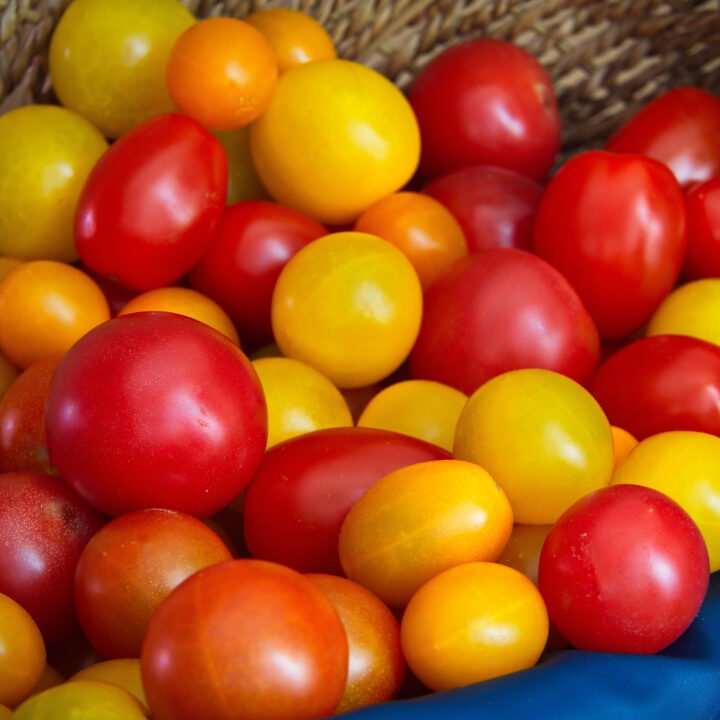
Nearly everything we sell comes two ways: by the kilo and by the box. The box is always the lower rate per kilo — tomatoes are AED 6 a kilo or AED 25 a box — and it is very easy to read that as "the box is cheaper" and stop thinking.
It is not the same statement. Produce you throw away was bought at full price and returned nothing. The real question is not which unit is cheaper per kilo, it is which unit is cheaper per kilo eaten, and that depends entirely on the item and on your kitchen.
The arithmetic, honestly
Take the tomato. If a box is five kilos, you are paying AED 5 a kilo against AED 6 — around a 17% saving. Good. Now throw away a kilo of it because it went soft on day six, and you have paid AED 25 for four kilos, which is AED 6.25 a kilo. You have paid a premium for the privilege of buying in bulk.
The break-even is not far away, and it is why this decision deserves thirty seconds rather than a reflex. Box weights are on every product page, so the per-kilo rate is always checkable before you commit.
Buy the box: things that keep
Onion, garlic, ginger, potato. The clearest case. Stored properly — dark, dry, air moving around them, not in the fridge, and not in a sealed bag — these go weeks. A box of onions is the single best-value item in the shop for any household that cooks daily.
One rule attached to it: never store potatoes and onions together. Onions push potatoes into sprouting. Separate containers, both dark, both dry.
Carrot, beetroot, white radish, sweet potato. Two weeks or more in the fridge. If they arrive with leaves on, cut the leaves off first — they keep drawing water out of the root and will soften a firm carrot in days.
Cabbage and pumpkin. A whole cabbage holds a week or more and a whole pumpkin longer than that. Both are also the cheapest way to add bulk to a meal, which is the other half of what makes them worth a box.
Apples and pomegranate. The two fruits that genuinely reward bulk. Green apples will hold a month refrigerated. A whole pomegranate goes two weeks on the counter and a month in the fridge.
Buy the kilo: things that do not wait
The herb bunch and the lettuces. Three days is realistic, ten with real care. There is no version of this where a big weekly quantity works out. Buy small and buy often — this is the main reason we deliver daily.
Berries. Strawberries give you two or three days. Blueberries manage five to seven and freeze well, which makes them the one berry where buying ahead is defensible.
Cucumber, zucchini, eggplant. Three or four days. They also do not like being cold and wet at the same time, so a big bag in the fridge tends to go slimy at the ends rather than simply drying out.
Anything already ripe. A ripe mango, avocado or peach has a day or two. Buying a box of ripe soft fruit means eating it as a project.
The split that actually works
For most households the answer is not "box" or "kilo", it is both, on different rhythms.
Buy the keepers in bulk, monthly or fortnightly: onion, potato, garlic, ginger, carrot, cabbage, apples. Buy the perishables by the kilo, twice a week: the herb bunch, lettuce, cucumber, tomato if your household is small, and whatever fruit you actually plan to eat in the next three days.
That pattern gets you most of the bulk saving with almost none of the waste, and it is what the customers who have been ordering from us for years converge on without being told.
Two constraints people forget
Storage. A box needs somewhere dark, dry and ventilated that is not the fridge. In a Marina one-bedroom that place may not exist, and a box of onions on a hot balcony is a box of sprouted onions. Be honest about the space before you buy for the price.
Household size. Below about four people, most boxes of perishable items are a mistake unless you are cooking for guests. Above six, almost every box on the list pays for itself. In between, use the split above.
If you are cooking commercially
Then the calculation is different and simpler: you turn stock over fast enough that spoilage is a rounding error, and the box rate is straightforwardly the right answer on nearly everything. For a regular weekly list it is worth using the wholesale enquiry form rather than the checkout — we will quote the whole list rather than making you rebuild a basket every week.